
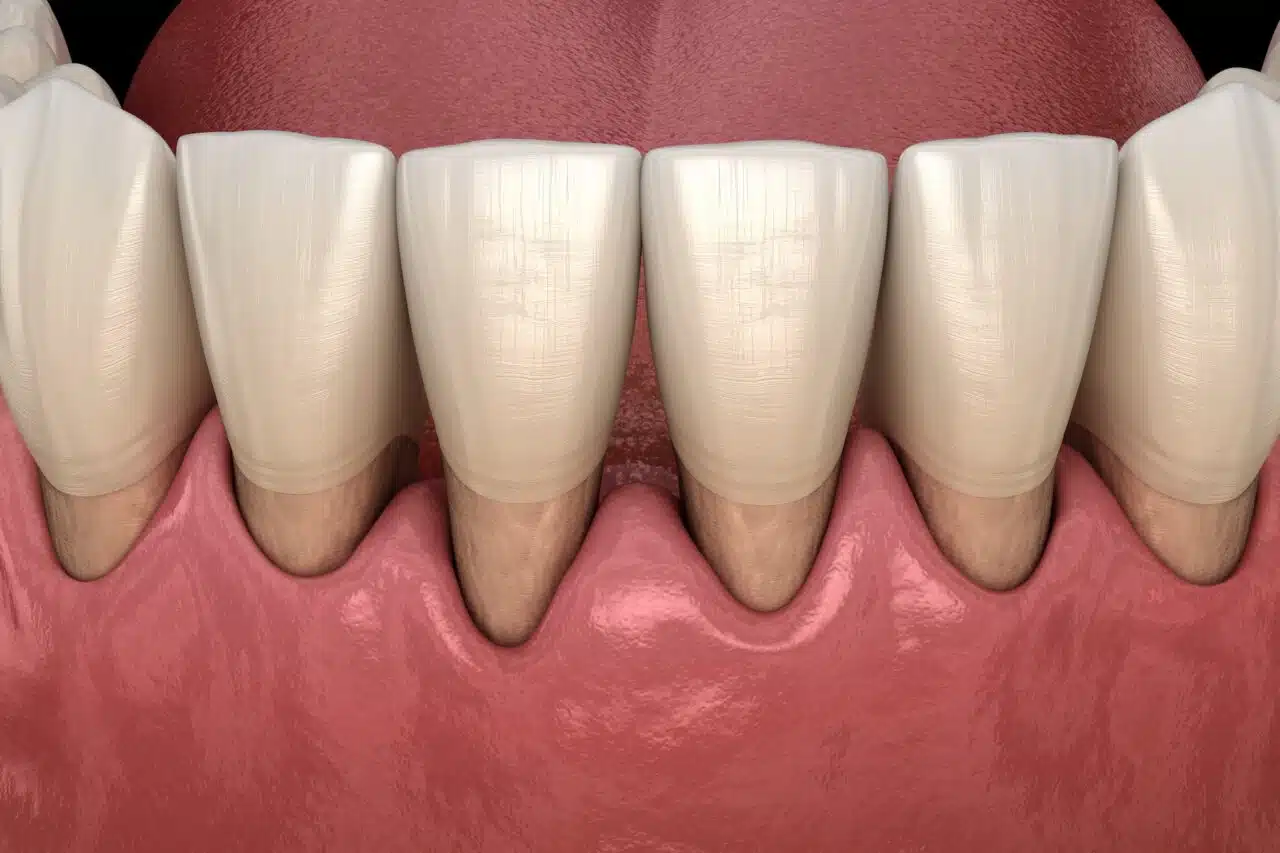
When it comes to oral health, few questions create more anxiety than “how far can gums recede before teeth fall out?” This pressing concern affects millions worldwide, with approximately 88% of people over 65 experiencing some degree of gum recession. While receding gums might start subtlym understanding the progression from early recession to potential tooth loss is crucial for maintaining your smile. Knowing exactly how gum recession progresses and when teeth become at risk can make the difference between keeping your natural teeth and facing significant dental complications.
Understanding Gum Recession and Tooth Loss
Gum recession occurs when gum tissue pulls away from teeth, exposing sensitive root surfaces and compromising tooth stability. This common dental condition affects up to 88% of people over age 65, though it can occur at any age. When left untreated, severe recession can ultimately lead to tooth loss.
The Mechanics of Gum Recession
Gum recession typically begins gradually, caused by:
- Aggressive tooth brushing
- Periodontal disease
- Genetic factors
- Poor oral hygiene
- Tobacco use
- Misaligned teeth
As gums recede, they create “pockets” between the teeth and gum tissue. These pockets can harbor harmful bacteria that accelerate tissue and bone loss, eventually threatening tooth stability.
How Far Can Gums Recede Before Teeth Fall Out?
The critical threshold for tooth loss risk occurs when gum recession reaches approximately 5 millimeters or more, especially when accompanied by significant bone loss. However, the progression typically follows distinct stages:
Stages of Gum Recession
- 1. Mild Recession (1-2mm)
- Minor cosmetic changes
- Increased sensitivity
- Generally stable tooth support
2. Moderate Recession (3-4mm)
- Visible root exposure
- Pronounced sensitivity
- Formation of periodontal pockets
- Early signs of tooth mobility
3. Severe Recession (5mm+)
- Significant root exposure
- Extensive bone loss
- Notable tooth mobility
- High risk of tooth loss
Warning Signs and Prevention
Key Indicators of Advanced Recession
Watch for these critical signs:
- Visibly longer teeth
- Increased sensitivity to hot and cold
- Loose or shifting teeth
- Persistent bad breath
- Bleeding or swollen gums
- Visible gaps between teeth
Preventive Measures
Take these steps to prevent further recession:
- Use a soft-bristled toothbrush
- Practice gentle brushing technique
- Maintain regular dental checkups
- Address grinding or clenching habits
- Quit smoking
- Consider professional cleaning
Treatment Options and Professional Intervention
Early Stage Treatments
- Professional dental cleaning
- Improved oral hygiene routine
- Addressing contributing factors
- Regular monitoring
Advanced Treatment Options
When recession becomes severe:
- Scaling and root planing
- Gum graft surgery
- Bone regeneration procedures
- Possible tooth replacement if loss occurs
Long-term Management and Outlook
While early-stage recession can often be stabilized through proper care, advanced cases require professional intervention. Working with a dental professional is crucial for developing an effective treatment plan and preventing tooth loss.
For comprehensive evaluation of your gum health and personalized treatment options, schedule a consultation with Smile Vegas Dental. Our experienced team can help protect your oral health and prevent tooth loss from gum recession. Contact us today to learn more about our periodontal services.

